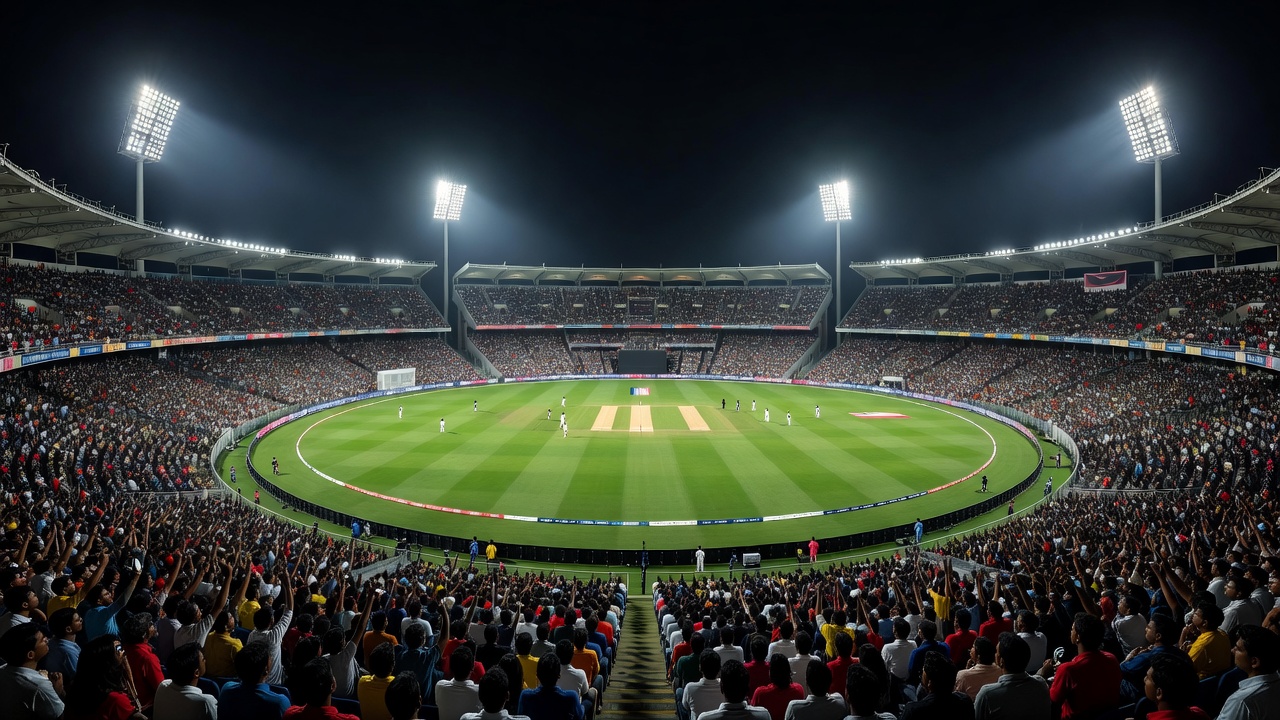
To walk into an Indian cricket ground on match day is not merely to attend a sporting event—it is an assault on the central nervous system. The heat, the smell of roasted peanuts and cardamom tea, the iridescent sea of indigo shirts, and the decibel levels that rattle chest cavities create an environment unlike anything else in world sport. Each major venue across India possesses a distinct tactical identity, meteorological micro-climate, and cultural demeanor.
Eden Gardens, Kolkata: The Cauldron of Intimidation
Eden Gardens is cricket’s Coliseum. In the late 1990s, when wooden benches still squeezed upwards of 100,000 spectators inside its bowl, Steve Waugh famously declared that walking out to bat at Eden was like walking into the thunder of a roaring jet engine. It was here in 2001 that VVS Laxman and Rahul Dravid batted through an entire unbroken day against prime Australia, fundamentally shifting the psychological posture of Indian cricket forever.
The pitch here has evolved from a turning slow-burner to a true, bouncy surface under the winter dew of the Hooghly River. When Eden erupts, the sound is visceral; it is an unforgiving arena where heroes are canonized and visitors are shaken to their very boots.
Wankhede Stadium, Mumbai: The Heartbeat of Indian Batting Royalty
Perched just stones away from the Arabian Sea, the Wankhede is modern Indian cricket’s spiritual headquarters. It is compact, steep, and acoustic perfection. The marine breeze rolls in over Marine Drive in the late afternoon, swinging the red Kookaburra ball during twilight while offering genuine carry for top-order stroke-makers.
Wankhede witnessed the apex of modern Indian sporting folklore on April 2, 2011, when MS Dhoni struck that unforgettable six over long-on to seal the World Cup. The crowd here is educated, fast, sharp-witted, and intolerant of lazy fielding. It is also the home that raised Sunil Gavaskar and Sachin Tendulkar—where every push through mid-off is appraised with connoisseurial precision.
"A cricketer has not fully experienced the theatrical weight of the sport until he has stood at the center of Wankhede with forty thousand fans singing Vande Mataram in unison under the floodlights."
M.A. Chidambaram Stadium (Chepauk), Chennai: The Knowledgeable Citadel
If Eden is passion and Wankhede is glamour, Chepauk is the ultimate seminar room of cricket intellect. The Chennai crowd is famously recognized as the most knowledgeable and objective in the nation. In 1999, after a heartbreak loss to Pakistan by a razor-thin margin of 12 runs, the entire Chepauk grandstand stood on its feet to give Wasim Akram’s men a prolonged standing ovation.
The ground features clay soil that bakes under the relentless southern sun, offering gripping turn for finger spinners and requiring batsmen to possess immaculate footwork and supple wrists.
Stadium Technical Profiles & Match Characteristics
| Venue | Capacity | Dominant Pitch Soil | Signature Tactical Feature |
|---|---|---|---|
| Eden Gardens (Kolkata) | 68,000 | Clay / Loam alluvial blend | High evening dew factor; true carry with late-innings reverse swing. |
| Wankhede Stadium (Mumbai) | 33,108 | Red Soil (Maharashtra Deccan) | Sharp bounce, high boundary scoring rate, coastal sea breeze swing. |
| M.A. Chidambaram (Chennai) | 38,200 | Black Cotton / Coastal Clay | Abrasive dry deck; rewards wrist-spin, sweep shots, and reverse yorkers. |
| M. Chinnaswamy (Bengaluru) | 35,000 | Sand-base Sub-surface with Mandya Clay | SubAir vacuum drainage; compact 65m boundaries; 900m altitude ball travel. |
| HPCA Stadium (Dharamshala) | 21,200 | Ryegrass & Silt base | High altitude (1,457m); lateral seam movement through chilly Himalayan gusts. |
Pros & Cons of Modern Stadium Expansions
The Pros:
- Unmatched Infrastructure: Next-generation LED floodlight arrays eliminate shadow cast and modernize high-frame-rate broadcast capabilities.
- Rain Drainage Marvels: Systems such as Chinnaswamy’s SubAir can evacuate 10,000 liters of surface water per minute, resuming matches 15 minutes after torrential tropical downpours.
The Cons:
- Sanitization of Atmosphere: Tiered corporate hospitality glass boxes have occasionally replaced the raw, continuous terraced noise of vintage concrete bleachers.
- Standardized Boundary Distances: Modern security setbacks and LED advertising boards have shortened square boundaries across metropolitan grounds, skewing the balance between bat and ball.