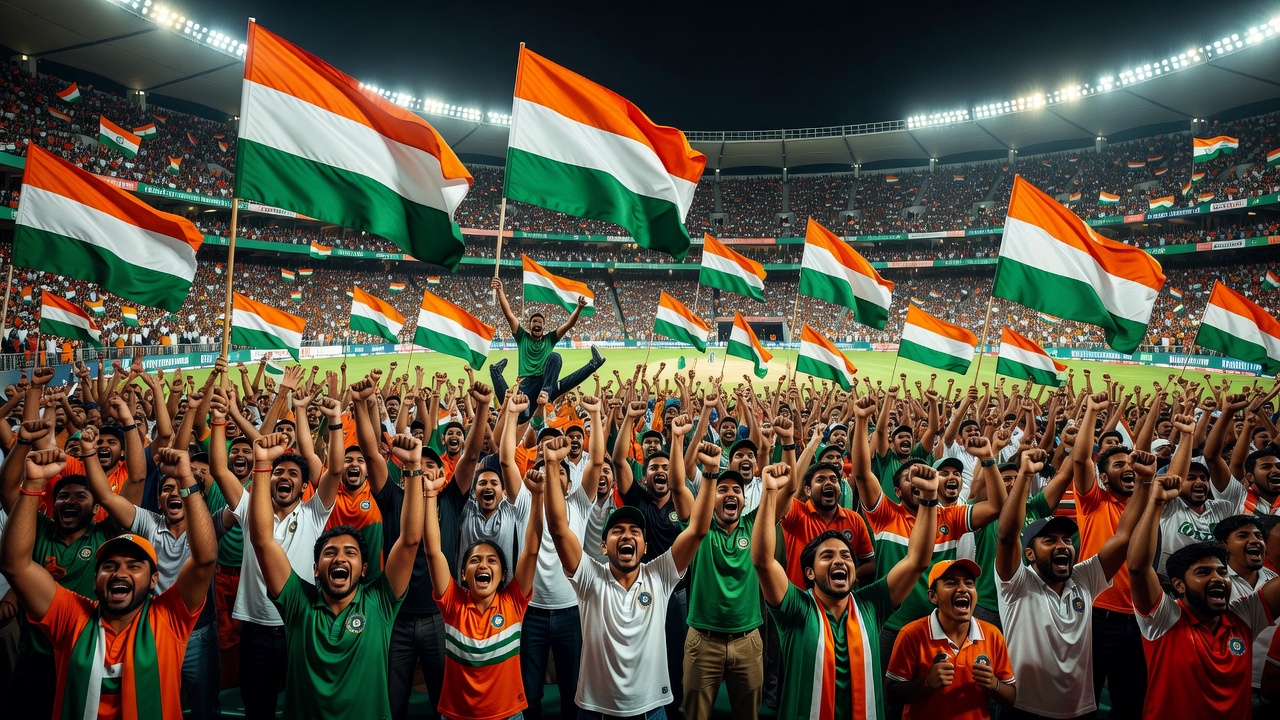
In global sport, English football grounds have their terrace hymns and South American football possesses the unrelenting carnival drum line of the *barra brava*. But Indian cricket fandom occupies a sensory domain entirely its own. It is neither purely European spectator chanting nor North American stadium organ cues; it is an organic, devotional, and rhythmically complex celebration driven by regional folk traditions, dhol drummers, and collective national catharsis.
The Genesis of "Sachin... Sachin! [Clap-Clap-Clap]"
Before the IPL franchise loyalty and corporate trumpet jingles took root, there was one chant that could quieten an argument in any marketplace from Srinagar to Kanyakumari. The chant began in the late 1980s when a teenage boy from Bandra stepped into international arenas to counter Wasim Akram, Waqar Younis, and Curtly Ambrose.
The cadence is trochaic: two trochees followed by three synchronic, rapid-fire hand claps. It operated not just as an encouragement for Tendulkar; it was a societal mantra during a period of post-1991 economic liberalization, when India sought global validation. When that chant rose from the concrete tiers, it carried the weight of a nation realizing it could stare down the best on earth and triumph.
"It started when my mother used to call me from the balcony downstairs: 'Sachin, Sachin!' I never imagined that her voice calling me home for lunch would one day be echoed by a hundred thousand throats simultaneously." — Sachin Tendulkar
The Anatomy of Modern Stadium Chants
As the game migrated into franchise tribalism, chants became sharper, more localized, and deeply connected to linguistic identity:
- "Jeetega Bhai Jeetega, India Jeetega!" — The foundational call-and-response chant of Indian sports crowds since the 1970s, establishing spontaneous brotherhood across demographic divides.
- "Ee Sala Cup Namde" (Kannada) — The undying, defiant liturgical anthem of Royal Challengers Bengaluru fans, symbolizing stubborn romantic loyalty in the face of cyclical heartbreak.
- "Whistle Podu" (Tamil) — Born in Chennai, this musical chant transformed whistling—traditionally an informal street expression—into a badge of franchise honor.
- "Ganpati Bappa Morya" & Nashik Dhol Chants — The thunderous percussive backbone of the western stands, setting a relentless polyrhythmic tempo that bowlers use to synchronize their run-ups.
The Superfans: Pilgrims of the Boundary Line
No study of Indian cricket culture is complete without examining its resident ascetics—the superfans who dedicated their mortal lives, livelihoods, and bodies to following the national eleven across the planet.
| Superfan Icon | Signature Ritual & Attire | Matches Attended | Cultural Significance |
|---|---|---|---|
| Sudhir Kumar Chaudhary | Body painted in the Indian tricolor, blowing a conch shell continuously, waving a giant flag. | Over 350 international fixtures | Personal guest of Sachin Tendulkar during the 2011 World Cup victory celebrations inside the dressing room. |
| Chacha Chicago (Mohammad Bashir) | Tailored dual-tone sherwanis blending Indian and Pakistani motifs; symbol of cross-border amity. | Every ICC tournament since 2007 | Financially supported during key overseas tournaments by MS Dhoni, highlighting camaraderie across sporting borders. |
| Ram Babu | Tricolor-painted chest with MS Dhoni's name etched on his back, leading stand chants. | 200+ matches worldwide | The defining face of Ranchi and Dhoni fandom throughout modern bilateral tours. |
The Transformation from Spontaneous Noise to Curated Spectacle
The contemporary cricket stadium in India is witnessing a quiet clash between grassroots organic fandom and corporate event management. The introduction of DJ soundboards, stadium-wide LED smartphone flash sequences, and licensed brass sections has brought undeniable spectacle, but occasionally drowns out the impromptu terrace wit and regional song parodies that once made Indian stands a cauldron of authentic folklore.